Showing posts with label Movies. Show all posts

Friday, August 10, 2012

Even More Hobbit Disappointment

Don't try and explain yourself. I'm pretty sure we're done.
So, on top of doing away with miniature photography, on top of the insanity of it now being a Hobbit Trilogy!, this list of companion figurines from Games Workshop contains quite a few SPOILERS as to the specific characters and contents in these clearly misguided movies. Here are a few of the highlights:

Drogo Baggins (Frodo's father) and the Tavern Maid
Dís, Mother of Kili and Fili
Gimli (Stubble) (More Gimli comic relief, I take it, 'cause that totally does justice to the character.)

Grinnah & Mirkwood Werewolves ('Cause wargs weren't enough, I guess.)
The Werebeast
The Willowhags
Bloodwraiths
The Necromancer / Flesh Avatar
Narzug & Orc Summoner Coven
Tomb Wights
Mounted Tomb Wights
Saruman & The Ringwraiths
Vampire Bat Swarms
Galadriel (Water Steed)
Radagast’s Chariot / Spellfire Cart
Fire-wyrms (more dragons, great)
Braga & Goldscale Worshippers (some kind of dragon cult??)
Venomblade Assassin
Goldscale Priest (I guess so.)
Bofur on Cold-Drake (Yes, apparently Bofur will be riding a dragon.)
Dragon Thrall (whatever that is)
Fell Hatchlings
The Beornings (even though they didn't exist at the time of The Hobbit)
Turin, The Dragonslayer (as in the Turin Turambar from The Silmarillion, 'cause that makes sense.)

And, finally, this cryptic and very disconcerting heading:

Galadriel (Barrel)

I vow to you now, if Peter Jackson puts Galadriel in a barrel I'm walking out of the theater.

Friday, July 20, 2012

Everything Wrong With The Dark Knight Rises

I've decided to make what I'm sure will be the first of many posts on this much-anticipated movie a kind of list of reactions. Which are in no particular order. Make of it what you will:

SPOILERS AHEAD

 
  1. Pacing.
  2. Tone.
  3. Maniacal supervillanry.
  4. Doomsday devices.
  5. Uncompelling action sequences.
  6. A much, much too brief "re-training" period for Bruce. (Screen-time, I mean. 3 months in a few minutes? Cue sit-up montage.)
  7. A much, much too brief parallel "under seige" period for Gotham.
  8. Lucius Fox and Commissioner Gordon are side-lined.
  9. "Get the President on the line," etc.
  10. The old "fly away from the city, detonating the bomb and sacrificing yourself" trope (or should I say cliché) already used once this year by Avengers.
  11. A half-assed romance with Miranda Tate that means nothing and goes nowhere.
  12. "The Bat." That's a big one.
  13. Political commentary.
  14. Camp.
  15. Cat-woman's goggle, ear, things.
  16. Yet again, Bane is really just a tool.
  17. Batman having gone into retirement period. Batman doesn't retire for 8 years, no matter how good it is. Come on.
  18. No redemption for Gordon.
  19. The trivialization of Alfred's mourning.
  20. Alfred pretty much just showing up a couple of times to have rushed conversations that culminate in him saying something profound and insightful and then walking away dramatically.
  21. The Bat Cave? Meh.
  22. Everything, I mean everything about the ending.
Right after The Dark Knight came out I said that Christopher Nolan is gonna do another one, and it's going to be too huge, have nine million villains, in other words, fall into all the same "traps" the third installments in superhero series are famously plagued with. But for Nolan these wouldn't be traps. He would manage to unite it all into one cohesive story which hit at the heart of Batman and morality and all that stuff we love Nolan for.

The verdict? Nope. He couldn't do it. Pretty good effort I have to say. Not fundamentally flawed, I don't think, just poorly executed. Most of all I think it's pretty clear that Nolan didn't really wanna make this movie.

Wednesday, July 18, 2012

Peter Jackson: The Next George Lucas

Further evidence that Mr. Jackson's losing his mind:

Peter Jackson On Doing Away With Miniature Photography For The Hobbit

Remember when Lucas did away with miniatures and conventional special effects in favor of computer animation? That turned out great! I call it "Skywalker Syndrome." So far it's produced the Prequel Trilogy and Indiana Jones and the Kingdom of the Crystal Skull among others. Let's hope the Hobbit films aren't quite in that category, but it's looking worrisome.


Wednesday, May 9, 2012

Marvel's Track Record, And What To Expect In The Future

I don't know if Marvel Studios were planning all this way back in 2003 when the atrocious Hulk debuted. Regardless of whether they were or not, and regardless of the fact that 2008's The Incredible Hulk only half-acknowledges the existence of Ang Lee's train wreck, it's still true, I think, to say that Joss Whedon's The Avengers is 9 years, 7 films, and a combined $1.1 Billion in the making.

At this point, it doesn't even matter if the movies were good or not; Marvel gets huge geek props just for trying.

Of course, with the exception of Hulk, they were good. Very good. In fact, if you ask me, of the 6 Marvel films in the Avengers Movie Universe produced so far (not counting Hulk):

     1 was second only to The Dark Knight when it comes to superhero movies (The Avengers),
     2 were amazing (Captain America and Iron Man 2),
     2 were very good (Thor and Iron Man),
     and only 1 was mediocre (The Incredible Hulk).

What's more, in one sense The Dark Knight is really an unfair comparison, not really qualifying as a straight "superhero flick," making The Avengers really the best there's ever been. That's a pretty impressive track record.

Here's the ambitious list of films in the same universe Marvel is already in the process of producing:

     Iron Man 3,
     Thor 2,
     Captain America 2,
     The Avengers 2,
     Runaways,
     Black Widow,
     Hawkeye,
     Nick Fury,
     S.H.I.E.L.D.,
     and War Machine.

More than that, here's the list of films Marvel have yet to confirm, but are believed to be in the early stages of development:

     The Warriors Three,
     The Winter Soldier,
     War Machine,
     Black Panther,
     Ant-Man, a spy movie,
     Iron Fist,
     Dr. Strange,
     Guardians of the Galaxy,
    and, finally, The Avengers 3 in 2017...

...most likely to be based on the Secret Invasion, which will have been set-up in previous films. If they can maintain the same ratio they've been able to thus far for the 19 or so films on the way that would make for a grand total of roughly:

     4 films almost as good as or better than The Dark Knight,
     8 or 9 amazing superhero movies,
     8 or 9 very good movies,
     and only 4 mediocre ones.

But let's see if we can get a little bit more objective with this analysis. Also, let's give Marvel the benefit of the doubt and pretend Hulk never happened. There are a lot of ways to measure a movie's success: Worldwide Gross, Opening Weekend, Critical Reception, and so on. Let's take a look at how some of these numbers can help us understand the enormity of what Marvel have accomplished.

Consider sheer Worldwide Gross, for example:


The Avengers is projected to displace Pirates of the Caribbean: Dead Man's Chest for the #6 spot on the list of the highest grossing films of all time, putting half of the films in the Avengers Movie Universe in the Top 100 highest grossing films of all time.

But how do these numbers compare with actual profits earned? It doesn't matter how much money a movie brings in if it cost too much to make:


Incredibly, at 1.1 Billion, The Avengers is itself expected to gross more than the combined budget of the entire franchise, turning every dime grossed by the other 5 films into pure profit. This is what Marvel knew all along, and why they were willing to expend so much time, effort, and cash to get The Avengers made. Somebody finally figured out that geeks have money. And their favorite thing to do with said money is spend it on geeky stuff.

In other words, as hard as it may seem to accomplish, if you can pave the way for a quality super-blockbuster like The Avengers, which exists within a consistent movie universe, utilizing the same actors, it will all pay off in the end, because you will have managed to do something no one thought possible. And people will come to see it. Like Apple and Target, Marvel have discovered that the best way to get people to buy your stuff isn't to make it cheap, it's to make it good and exciting.

Sheer box office gross is relatively easily tainted by environmental factors like competing films, a bad economy, and the like. Probably the best indicator of how excited fans are to see a film are the opening weekend results. Considering that every film opens on a different number of screens, though, to get a fair read you need to consider the per theater averages for the opening weekend:


When you compare those numbers to the adjusted-for-inflation, per theater averages of Jurassic Park at $29,138, The Return of the King at $23,186, and kind of amazingly, what was supposedly "the most anticipated movie of all time," Star Wars: Episode 1 at $28,283 (averaging only 60% per theater what The Avengers did), you start to realize the league these movies are in.

But money isn't everything. If they were smarter the studios would understand that in a (geeky) venture like this, it's not so important that each individual film make loads of money. What's important is that the whole series continues to be well-received by the public. As long as they can maintain a relatively high standard for the films in the series, and pave the way for more super-blockbusters like The Avengers, the potential for money to be made off this franchise is almost endless. 

So how do you measure lasting public opinion objectively? Let's look at the (surprisingly unfavorable) results from three major review sites:


It seems the general population doesn't agree with me about the quality of these movies. Maybe, though, this sample is too objective. After all, as I suggested above, it's not really fair to compare Iron Man with The King's Speech. Let's see how they stack up against the same average reception ratings of some other big genre movies:


I happen to think Nevertheless, it is clear these movies rank amongst the best genre films of all time. Even more germane to our purposes is the following chart which breaks down the same information as above by genre franchise:


The Avengers Movie Universe comes in fourth in this list, behind three franchises which I would argue are not "genre" films per se and are perhaps inappropriate comparisons for these Marvel superhero movies. And yet, even if that is not the case, to have created the fourth-best genre film franchise of all time is no mean feat.

All of this is to say that the folks at Disney/Marvel have really accomplished something special with these movies. And there are more to come. If they can maintain a similar level of average quality across the remaining films in this franchise (however many that will end up being), we're looking at a truly revolutionary and historical film-making event. And they're about superheros.

Godspeed Marvel. Godspeed.

Sunday, May 6, 2012

What If Warner Bros. Were As Smart As Disney?

In 2013, a Superman reboot entitled Man of Steel is set to be released. It's directed by Zack Snyder of Dawn of the Dead, 300, and Watchmen fame, written by David S. Goyer who helped Christopher Nolan pen the first two installments of his Dark Knight Saga, and produced and "grandfathered" by Christopher Nolan himself. It's also been announced that Nolan and Goyer will cooperate similarly on a Batman reboot to be released in 2015, The Dark Knight Rises being the last in Christopher Nolan's personal Bat-verse.


2011's Green Lantern was...lackluster, to be sure, but Ang Lee's atrocious Hulk and Louis Leterrier's mediocre The Incredible Hulk, didn't stop Marvel. Cleverly, they managed to move forward with the Hulk's story while only half acknowledging the existence of the first film. Warner Brothers could easily do something similar simply by recasting Hal Jordan if they didn't want to risk a pseudo-sequel along the lines of The Incredible Hulk.

Back in 2007, following the release of Superman Returns and Batman Begins, Joss Whedon was attached to direct a Wonder Woman adaptation to match the recently executed reboots of the other two chief Justice League properties. Eventually the project fell through. But, given the astounding success Joss Whedon brought Marvel's The Avengers, I have no doubt that Warner Brothers are looking at that Wonder Woman idea again (with or without Whedon himself), to coincide this time with the re-reboots coming in the next couple of years.

Clearly, Warner Brothers is within striking distance of following in Marvel's footsteps and bringing the Justice League together for the first time on the big screen. More than that, doing so under the oversight of Christopher Nolan.

After Man of Steel and the first film in the rebooted Batman franchise, the next step would be Wonder Woman and, if they attempted to follow in Marvel's Incredible Hulk footsteps, a Green Lantern pseudo-sequel (likely introducing the Sinestro Corps War). This is all the set-up needed for a Justice League film, potentially slated for release in Summer 2016. Justice League would introduce The Flash and Martian Manhunter in similar fashion to how The Avengers treated Black Widow and Hawkeye. The League's first villain would be Lex Luthor, as set up in Man of Steel à la Loki in Thor and The Avengers.


Justice League's success would pave the way for a Superman sequel in which he returns to Metropolis to fight another of his famous villains. Say, Metallo, or a Metallo-Parasite team-up. Brainiac might be the best choice. (Unless he's to be used as the Justice League 2 villain, as you'll see.) The Batman sequel would pit the Caped Crusader against a more serious of his villains than he faced in the first film. Perhaps, And, if they've learned anything from Nolan, the Batman sequel would not introduce Robin. Wonder Woman would probably not get a sequel. If a Green Lantern pseudo-sequel wasn't released before Justice League introducing the Sinestro Corps War, it would be now. The Flash and Martian Manhunter would get their own origin story prequels as well.

Leading to Justice League 2, which would either pick up where the Green Lantern pseudo-sequel left off with the Sinestro Corps War (if they went that route), or, if not, likely introduce Brainiac as the League's first major cosmic villain. This is very similar to what Marvel plans to do with the Avengers. The first film was just the team's origin story. In the sequel they will be forced to take their place on a more cosmic stage, facing off against Thanos. Brainiac is a good DC analogue for such a scheme. Justice League 2 would also introduce Aquaman, prepping him for a solo film of his own, though probably not his origin story.

After Justice League 2, Superman 3 would feature whatever major villain the Man of Tomorrow hasn't faced yet, or the return of Lex Luthor. Probably enough time would have passed in between The Dark Knight and the release of Batman 3 to attempt a post-Heath Ledger Joker. If all went well with Justice League 2, now is when they would start releasing solo films for more minor characters, just like Marvel is now doing for Black Widow, Hawkeye, and Nick Fury. I already mentioned Aquaman. We would likely see a Green Arrow film, also featuring Black Canary and maybe The Atom. There would also need to be a Green Lantern 3 to follow up with the Sinestro Corps War, assuming Justice League 2 didn't already do that. There's room for one more sequel. That would probably be whichever of Wonder Woman, The Flash, or Martian Manhunter made the most money.

Please let me see this movie.
Then follows Justice League 3 (adding Plastic Man, and maybe Hawkman and Hawkgirl, to the mix, though maybe not), in which our heroes would square off against their greatest enemy, Darkseid.

To sum up:
Man of Steel - Summer 2013
Batman (and it will probably be called that) - Summer 2015
Wonder Woman - Christmas 2015
Justice League - Summer 2016
Superman 2 (perhaps Man of Tomorrow) - Christmas 2016
The Flash - Spring 2017
Batman 2 - Summer 2017
Manhunter - Christmas 2017
Green Lantern 2ish - Spring 2018
Justice League 2 - Summer 2018
Aquaman - Christmas 2018
Green Arrow - Spring 2019
Superman 3 (maybe Last Son) - Summer 2019
Green Lantern 3ish - Christmas 2019
Wonder Woman/The Flash/Manhunter 2 - Spring 2020
Batman 3 - Summer 2020
The Atom - Christmas 2020
Justice League 3 - Spring 2021
But none of this will ever happen, because Warner Brothers will never see this post, and will never understand that I'm smarter than any of them. As a friend recently pointed out, if anything, they're most likely to make a Robin spin-off of the Batman reboot. Pathetic. Pull it together guys.

Friday, April 20, 2012

Monday, March 26, 2012

The Principle Of Subsidiarity In The Hunger Games

Many critics have picked up on the political undertones present in The Hunger Games. Clearly that dystopian future has some parallels to our present American situation. In the film Katniss Everdeen volunteers to be the tribute from her home district that will compete in the annual Hunger Games for both glory and food. Almost immediately she is whisked away from her home and family and put aboard a train bound for the Capital. She and her compatriot Peeta are understandably astounded at the level of luxury which is available.

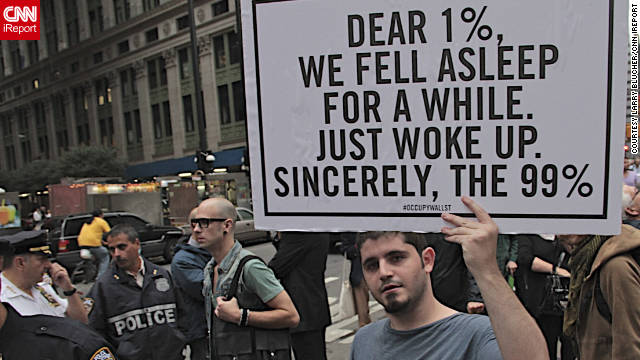
A striking contrast appears between life in the Capital and the outer districts. As tributes they are provided with nothing but the best. Nevertheless, the average level of wealth and comfort in the Capital is starkly different from that elsewhere. Back home Katniss was forced to hunt wild game, even squirrels, for her family to even survive. Here the populace has more than enough money to waste on keeping up with some ridiculously flamboyant and outlandish fashion trends. A very small number of people enjoying the benefits of the hard work of a very large number of people. A massive gap in the level of prosperity experienced between the rich and the poor. A non-existent or shrinking middle class.

Sound familiar?


I should say that I am deeply opposed to the suggestion that a work of art can or should be treated as the artist's propaganda. It is either propaganda or a work of art, it cannot be both. Nevertheless, works of art, insofar as they incarnate, give life and form to, the principles of the reality and world around us, can certainly take positions themselves on political and economic issues of the day. Even the Divine Comedy has political relevance in our day and age. But it has this relevance only insofar as it has a relation to Truth and Reality, and political ideas stem from those higher and more fundamental principles.

That being said, it is no coincidence that the situation in The Hunger Games is analagous to our own. Artists have no choice but to write from their own experience of the world, and certainly Susane Collins when she wrote the book, and the filmmakers when they adapted it with her help were drawing on the realities in the world they saw around them as they worked to create a work of art with significance and meaning.

Obviously, the film advocates the position that such a situation is undesireable. And rightly so. It is certainly not right that the men and women who are working day in and day out to produce good and valuable things for the use of their community should be deprived of a fair share in the fruits of their labor. It cannot be right for the people doing the actual work to go hungry so that those who own or have a stake in the factory or farm can have enough extra income to buy a summer home in Florida or what have you. The question is, though, how does one solve this situation once it arises? Is it right to take a portion of the wealth that would otherwise be taken by the very wealthy and redistribute it amongst the less fortunate? Well, I would argue that our economic situation is, perhaps, somewhat different from that presented in The Hunger Games. Regardless, it is tangential to the point of this post.

In the flim the root problem that lies behind both Panem's situation and ours comes out much clearer than it does in real life, namely, centralization. The real problem is that it is possible for the very few to have such a wide-reaching influence that they it is even possible for them to amass such an incredible and unbalanced amount of wealth. The problem is huge coroporations with higher GDP's than whole nations. The problem is "product integration." The problem is Staples and Office Depot cornering the office supply market in every city, town, and hamlet from sea to shining sea. Sure, all this stuff keeps prices down, but is that really the most important thing?

Wouldn't it be nice if when you bought a new computer you could do so from some mom and pop electronics store on Main Street and know that when, six months later, they're able to buy a new sign or, for that matter, send their kid to College, you had a small part in that? Wouldn't that be better than handing your money to some megalithic, faceless multi-national conglomerate that's going to spend it on God knows what?

For example, I'll wager that most of you have no idea that starting in the 70s, Nestlé began marketing its infant formula to less developed countries around the world, especially Africa. Sounds harmless enough, right? Here's the problem. Aside from the fact that these babies were deprived of important antibodies and other benefits that can only be obtained from their mothers' milk, when a mother stops breastfeeding regularly her milk soon dries up. If at some point in the future, as is very likely, it becomes impossible to provide formula for her baby due to unsanitary water or just lack of funds or availability, that baby must now go hungry, and may starve to death.

Here's a list of Nestlé brands. Every time you purchased one of those products you supported Nestlé's crimes. Now, certainly we cannot be held responsible for what other people do with our money without our knowledge. For that matter, the degree of separation between buying a box of Nesquik and Nestlé doing what it does may be sufficiently remote to relieve any burden of material cooperation in their activities.

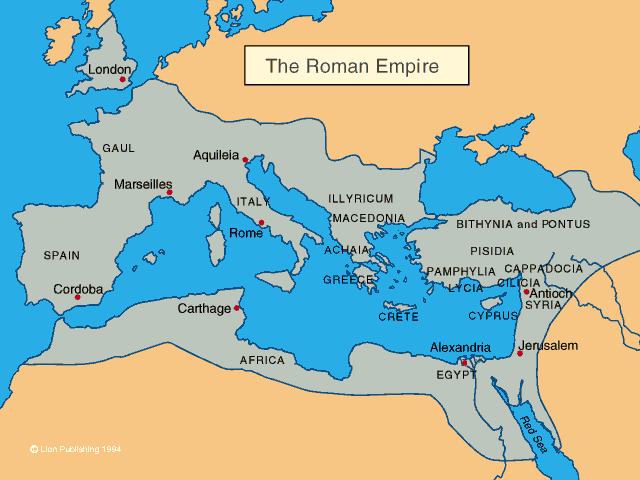
Nevertheless, the root problem remains: when institutions, corporations, governments become as centralized as they are today, the degree to which they are capable of representing the interests of real people, real families is diminished drastically. This could be why only 37.8% of voters turned out for the 2010 elections. Consider this: Even at its height under the Emperor Augustus, the Roman Empire is estimated to have had a population of only 56.8 million people. Taking into account that a very large percentage of that figure were not even citizens and you're left with a civilization comparable in size to, say, the state of New York, spread out over an area the size of Mexico and Central America combined:


The Romans were smart enough to recognize that even an Empire of that (compared to today, small) size couldn't be successfully managed in a very centralized, federalistic way. Instead they entrusted the vast majority of the day-to-day governance to local province and town governments. Pretty much only military and and handful of political and economic ventures were handled from the top down. Of course, there was more than just this practical reality at work behind that decision.

The Romans, along with every other Western culture and civilization until relatively recently, understood and accepted what Catholic thinkers have called the Principle of Subsidiarity. The Principle of Subsidiarity states that those decisions which can be made, those things which can be handled, just as effectively by a constituent member of a larger group as by that larger group itself, should be left in their purview. For example, as a father it would be wrong, not to mention crazy, for me to attempt to insist on absolute control over everything that goes on in my family. There is no reason for me to insist that my daughter organize her clothes or toys in just such a way, as long as she's keeping things tidy enough for the household to continue to function safely and smoothly.

Similarly, in a political structure, there is no reason why the federal government should have to intervene in the day-to-day workings of a state or local government as long as it is abiding by the minimum of general principles set forth in the unifying document(s). The Founding Fathers understood and accepted this. Thus, the Tenth Ammendment, all but forgotten in this day and age.

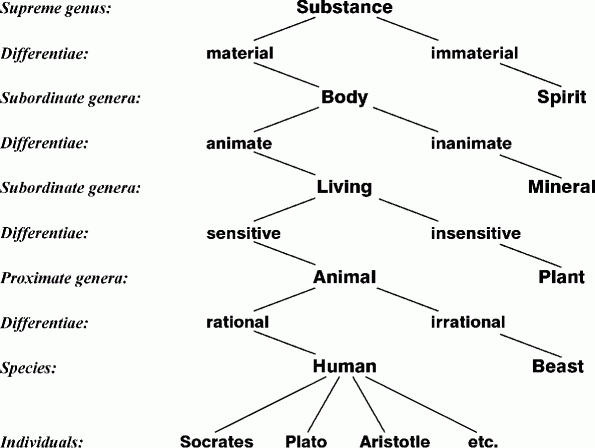
The Principle of Subsidiarty in government and economics in fact rests on a more fundamental philosophical and metaphysical principle of reality, namely, the Hierarchy of Being. All the beings in the universe are organized into a vast hierarchy of mediation and participation. That is to say, at every level in the universal hierarchy a particular being participates, shares its being and qualities of that being, with the beings both above and below it.


For example, the diamondback rattlesnake is one species within the genus Reptile. All reptiles have certain characteristics, and as a reptile the diamondback rattlesnake shares these with its fellow reptiles. Nevertheless, it itself specializes in certain things and has a number of characteristics (or, perhaps, a certain combination of characteristics) that make it unique. Of course it's more complicated than that, but the idea is that this same principle applies to every other being in the cosmos. Humans are part of the genus Animal; animals are part of the genus Living Being; living beings are part of the genus Material Being; material beings are part of the genus Being, the ultimate genus in which everything that exists shares, which, as Aristotle would say, we call "God." This is the way the universe is organized. It is the way things are supposed to be organized on the human level as well: decentralization, particularism, subsidiarity, delegation.

In The Hunger Games, the poorer districts just want to be left alone. I'm sure they'd be happy to pay taxes and tribute to the central government in exchange for a unified currency and military, but there is a point at which that central government becomes not just a unifying influence, but a tyrannical power demanding ultimate allegiance. Alexis deToqueville saw this coming centuries ago:
He predicted that modern democratic government would degenerate into a huge, paternalistic state which would guide the individual in all of his affairs and insure that all of his needs were met. “For their happiness such a government willingly labors, but it chooses to be the sole agent and the only arbiter of their necessities, facilitates their pleasures, manages their principal concerns, directs their industry, regulates the descent of property, and subdivides their inheritances; what remains, but to spare them all the care of thinking and all the trouble of living?” 
It's probably sheer fantasy to expect the situation to change. We're much too dependent on the financial industry to come back from it now. Governmentally-speaking the writing's been on the wall since 1865. And the New Deal didn't help. I wonder, though, what could happen if, despite all their differences, Occupy Wall Street and the Tea Party realized how much they have in common with one another. Their combined efforts would be a force to be reckoned with.
Sunday, March 25, 2012

Why The Hunger Games Is Dangerous

Full disclosure, I haven't read the books. As such, this isn't a review of the books, or a comparison between the two, or a review of the movie insofar as it is an adaptation. This is a review of the movie, as a movie, for what it is in itself.

Here be spoilers.


In The Hunger Games, Katniss Everdeen (whose character, incidentally, bears a striking resemblance to Loretta Lynn as portrayed in Coal Miner's Daughter) is a young woman in a poor, outlying district of a dystopian, fascistic future American society. When she was younger, her father died in a mining accident. Her mother was unable to cope with the loss and all but shut down, leaving Katniss to do most of the providing for the family. Things are so bad this includes hunting for wild game so the family can have enough to eat. Even squirrels.

We are told as the film opens that years before the people had risen up against the government. When the rebellion was suppressed, the Hunger Games were introduced as "penance" for the people's crimes. Every year, each of the 12 districts would put forward two "tributes," one boy and one girl, between the ages of 12 and 18. They are given over into the custody of the government, after which they are pitted against the tributes from the other districts in a fight to the death. The winning district receives not only glory, but food. Perhaps even enough food for everyone to eat relatively well for the rest of that year.

It soon becomes clear that these games serve much the same purpose as the gladiatorial contests of Ancient Rome did, namely, quelling uprising, though they go about it in a slightly different way. They both provide a similar catharsis for the people's violent tendencies, but where the Roman games were a kind of State propaganda, continually reminding the people of the State's ability to conquer against adversity and protect them from harm, the Hunger Games remind the people of the State's superiority over its own subjects. Interestingly, as the President (Donald Sutherland) suggests, they also provide the people with something to hope for. There is a realistic goal. Even though the more wealthy districts train their own tributes, one of which wins almost every year, any district can win in theory, and every one has before. If they do win, their hope is rewarded, but only until next year's games. If they lose, their hope for a better life has been quashed for another year, preventing rebellion.

When Katniss' little sister is selected as tribute against all odds, Katniss volunteers, taking her place. After being whisked away from her family she travels to the capital with her male counterpart Peeta in the lap of luxury. Upon arrival her training commences amidst a series of pageants and public appearances glorifying the event. All the while she begins to befriend Peeta against her better instincts. After all, in the end she'll have to kill him along with all the others in order to win. They are provided with a Mentor for their training, a former victor from their own district, in this case the drunk but devoted Haymitch (Woody Harrelson). It turns out that the most important factor in a victory is the ability to win sponsors who are able to provide you with much-needed supplies in-game.


Immediately the District 12 team begins attempting to capitalize on the notoriety Katniss has already won by volunteering in place of her sister. They appear in public for the first time wearing flaming suits, representative of their district's coal production. Later Peeta confesses on live television to having held an unrequited crush on Katniss for some time, Katniss is furious until Haymitch explains that they can play up the "star-crossed lovers" aspect in the media, thus setting them apart, winning them popularity, and earning them sponsors. Later, Haymitch instructs her explicitly to do what she can to sell the image he will attempt to create from the outside.

The night before the games begin neither can sleep. Peeta admits that he wishes there was some way that he could refuse to play the Capital's game, teach them that they don't own everyone, that they don't call all the shots. It is clear that the only way to accomplish such a thing would be to commit suicide, thus robbing the Gamemakers of their legal prerogative to sacrifice him "for the good of the nation." Katniss replies that she "can't afford to think like that," meaning she has a family to go home to, a little sister and mother to take care of. She doesn't have the luxury of thinking up ways to stick it to the Man; she must win, for her family first, and her district second.

As the games begin, we discover that Peeta was in fact given a kind of "way out." It has been obvious from the beginning that he has no real chance of victory. Katniss is the front-runner, or at least, the front-runner for the distinction of being the underdog against the well-trained and lethal "career" tributes. As such, it seems that he was instructed that his job was to keep Katniss alive, which, of course, he was more than willing to do, first, so that somebody from District 12 can win and its people eat well for a year and, second, out of love for her.

As the game progresses, the two grow even closer together, and Katniss begins to follow Haymitch's advice about embracing the "star-crossed lovers" ploy. It is clear that she is conflicted about doing this, but it is also clear that she has some kind of interest in Peeta. Nevertheless, she is obviously feigning most of the romantic aspect for the viewers' benefit. About midway through the games this leads to an announcement that the Gamemakers have made a rule change allowing two tributes to win together if they are from the same district. Immediately Katniss seeks out Peeta, finding him severely wounded, proceeding to nurse him back to health. In the end, it comes down to Katniss and Peeta versus one of the career tributes who is dispatched by an arrow to the hand and, quite literally, thrown to the wolves.


Just then, when they think they've won, another announcement is made that the prior rule change has been rescinded and the two "star-crossed lovers" must now fight each other in a theatrical final battle. Peeta asks Katniss to kill him, but Katniss produces a handful of poisonous berries and embraces Peeta's earlier idea. They each take some of the berries and prepare for their romantic suicide pact. They count to three, and just as they are about to eat the voice comes over the loudspeaker again and declares them the joint winners rather than allow them to disgrace the Government in this way.

And now we come to the heart of the potential problem with this movie. All appearances are that Katniss and Peeta have fallen so completely in love with one another that they can't bear to be without one another. Later Katniss says this very thing in an post-game interview. Faced with that painful possibility they would rather commit suicide, sticking it to the Man in the process, showing the powers that be that true love conquers all and what have you.

Is this the message we should be sending our children? Should we be telling them that, when life gets rough, it's better to die or to have never lived than to have to live in pain and suffering? That suicide is ever the right answer? To be sure they are presented with an awful, awful situation no one should ever have to face, but can one justify suicide even in such an extreme circumstance? Or should they just allow themselves to be killed by the Gamemakers in retribution for their refusal to comply?

I would argue that, in fact, what appears to be happening in this scene is misleading. First of all, Katniss isn't really in love with Peeta. She has definitely developed a kind of affection for him, but she is no Juliet to his Romeo. All the evidence presented to us in the film is that Katniss has one goal in mind: get home to her family. In the earlier scene where Peeta had first brought up his idea about committing suicide, Katniss' response was firm and straightforward: "I can't afford to think like that." In other words, "That's an interesting idea, but I've got a family to take care of, and I'm going to do my damndest to make sure that happens, whatever the cost." As far as we can see, she never wavered from this position. All the pageantry, all the romantic business with Peeta is all just her playing the part well so she can see to it she makes it out alive.

The suicide pact with Peeta is just another episode in the charade she's created. That is to say, she wouldn't have actually eaten the berries. She may have pretended to for Peeta's benefit, so that he could at least die "happy," thinking she loved him back. But at the end of the day, whatever her feelings for Peeta were, whatever her feelings toward the Government and the Gamemakers were, her only real conviction was of her need to get home to her mother and sister.

This may bear out in the sequel when she is forced to confront Peeta about her real feelings for him. Unfortunately, right now, this is a rather nuanced observation, and I don't think it will be clear to the average moviegoer. Instead, there will be a great many who are convinced that the suicide pact was the best decision they could have made. There will be a great many who see a film where suicide leads to a good outcome.  More than that, a mutual suicide motivated by romantic idealism! And that's dangerous.

Wednesday, October 19, 2011

William Shatner's Queen Cover


In case you weren't aware, somebody convinced Shatner to do a spoken word cover album. And, because no cover album is complete these days without "Bohemian Rhapsody":


Apparently brought to by and for stoners. I wonder if this falls in the "laughing with" or "laughing at" category. Hard to tell.

Friday, October 14, 2011

Star Trek (2009) Review

So, some of you have very kindly requested that I continue posting about Star Trek. Well, the next couple of posts I planned on the subject were going to be reviews of the latest in the Trek film series, J.J. Abrams' fantastic 2009 installment.

Unfortunately, RedLetterMedia did all my work for me and there's very little to add. If I think of something, though, I'll post it. For now, enjoy their comprehensive and thought-provoking review that ends up dealing with some very important issues in film.

Wednesday, October 12, 2011

I Told You So!

So, when Episode III came out and Lucas thrust some dude called "General Greivous" in everbody's face, I'm pretty sure the entire theater let out a collective "WTF?" After suffering through the rest of the movie, though, I sort of got what George was trying to do. Basically he was like a prototype Darth Vader, right? He's supposed to cast our minds forward to the "mechanical man" we all know is coming.

Here's the thing, though. I said it then, and I'll say it again. Darth Maul was far and away the best thing about the Prequels. Hands down. And we got to see him for a grand total of...maybe 10 minutes of screen time? I'll admit, a precursor to Darth Vader is kind of a neat idea. But why was it necessary to invent a brand new character nobody's ever heard of and make him, Surprise!, the main antagonist in the Clone Wars? The perfect opportunity was staring you right in the face.

We saw Darth Maul get severed in half. We didn't see him die. Why not bring him back with a mechanical lower half and lend some additional continuity to the Prequels themselves while you're at it? See, Episode I was so long before Episode II it kind of feels like part of a different series or something. If you bring Darth Maul back it ties them together better.

I'm telling you, you could have made his mechanical lower half with like less highly-developed technology so that he looked all janky and awesome. Hell, why not give him spider legs or something while you're at it? Make him even more of a badass. Not to mention, that brings a level of personality to the Clone Wars that was sorely lacking. Suddenly in addition to the abstract political nature of the fight, the Separatists' main general Darth Maul and one of the Republic's main generals Obi-Wan Kenobi have a serious score to settle.

Well, long story short. Somebody's finally listening to me. Not that I care anymore.

Saturday, October 1, 2011

Magic in Disney's The Lion King

The review of The Lion King over at Decent Films Guide is surprisingly scathing. Along with Beauty and the Beast, The Lion King is so beloved of so many that it takes guts to point out a flaw. While I agree with many of the points in that review, I would give The Lion King a higher grade, and encourage my own kids to watch it, for one simple reason: magic.

No, not "Disney magic," though there is that, I mean Rafiki the Baboon Witch Doctor's magic. "Whaaat?" you're probably saying. "How can a Christian possibly support a movie which suggests the validity of such primitive and satanic practices?" Some of you may remember that when The Lion King was originally released, many Evangelical Christians reacted strongly for that very reason. Disney was in the hands of Satan, pushing, at the very least superstition, and at the worst witchcraft on our children. Of course, the problem only got worse with Pocahontas and The Hunchback of Notre Dame.

We should remember that The Lion King is a story. Stories live in their own worlds. They must abide by the rules of the world they create in order to remain realistic. It would be kind of a strange thing if the first thing we saw at the beginning of the movie was infant Simba being taken to the local parish church for lions to be baptized. In a way, though, by analogy, that's exactly what happens in the opening scene—within the bounds of the pre-Christian world that The Lion King inhabits. Young Simba is annoited with oil on his forehead, presented to the priest in the form of Rafiki, and "baptized" in the light of the Sun for the whole kingdom to see.

It's magical, and rightly so. It is too easy to forget in our day and age what every other culture throughout history other than ours has known without a doubt, that the world is alive and teeming with supernatural activity we usually cannot see. Religion, in all its forms, paganism and Christianity alike, is merely an attempt to get a handle on that invisible, supernatural reality that shapes our lives without us knowing how or why. Of course, Christianity rises above all other attempts because it alone reveals the truth of God completely in Christ. Nevertheless, I appreciate a movie that illustrates the prevalence of the supernatural influences on the world in which we live. That's a lesson I wouldn't trade for anything.

Friday, September 23, 2011

Top 10 Reasons Picard Is Better Than Kirk

A friend made a good point when he said that the things which make Kirk awesome and the things which make Picard awesome, while completely different (and often opposed to one another) are equally valid. That being said, I thought the following list would be a good way to cap off this long series of Trek-related posts:

#10. He doesn't bang everything, thus avoiding space STD's.


#9. Picard solves crime mysteries in his spare time. Kirk couldn't if he tried.


#8. He's not a foolhardy idiot, never leaping into action and risking Red Shirts' lives in the process.
#7. He has a lovely singing voice and can play the flute damn well.


#6. He's got principles and stuff like that, leading him to give awesome impassioned speeches on morality:


#5. Size matters.


#4. (This one's from the wife.) He doesn't feel the need to take off his shirt willy nilly, but when he does... Wow. Kirk, not so much.


#3. You can rub his head for good luck.


#2. He got assimilated and freaking came back from it!


#1. He's British. 'Nuff said.


That's the last Star Trek post for a while. I promise.

Thursday, September 22, 2011

The Star Trek Civil War That Should Have Been, Part Two


When we left off, every eye in the Federation is on the Federation Council chambers where Captain Picard has showed up and given his account of the events in Star Trek: Insurrection. This launches a Federation-wide debate about whether the ends justify the means, about whether the Federation's interests as a whole outweigh those of its constituents. (Sound familiar?)

Out of nowhere, in the midst of the debate, a border planet gets attacked by some no-name alien race, and, in light of the raucous stirred up by Captain Picard's report, the Federation can't get its shit together in time to respond adequately. A bunch of people die before a neighboring planet can gets its own (non-Federation) ships there in time and the planet's governing body get together and decide to send a communiqué to Starfleet Headquarters on Earth announcing their secession. Thanks but no thanks.

Theoretically, every planet in the Federation is sovereign, but would that really hold up if it came down to it? For that matter, the Federation doesn't seem that inclined to follow its own rules lately. Say this border planet was home to some vast cache of resources the Federation couldn't survive long without.

All of a sudden, the issues from Insurrection, those which everybody in the Federation has had just enough time to come down on either side of, are of vast importance. To many, the prospect of a life without the Federation would be nigh unimaginable. How would they possibly be able to defend themselves against the Romulans, the Dominion, or the Borg?

On the other hand, the Federation was founded on a set of principles which many would never betray, no matter what the advantages, nearly primary among these being the sovereignty of its member-planets, and their rights to live according to their own systems of belief and conscience.

The battle lines drawn, it gets interesting to think about what could happen on board the Enterprise. Would everybody back Picard? Suppose in the intervening period Riker had been granted his own command. This ended up happening at the beginning of Star Trek: Nemesis, the movie that actually got made. Riker had turned down his own ship a number of times throughout the series, believing he could make a bigger difference as second-in-command on the Federation's flagship than as captain of some research vessel. He turned out to be right, and finally Starfleet offered him command of the newly-commissioned and state-of-the-art USS Titan.

Probably, like Robert E. Lee, the Federation would try to win Captain Picard over by offering him the top spot, which he would immediately turn down and take up the position in the Secessionist camp, bringing the Enterprise with him. Undoubtedly, he would be kind enough to offer safe transport to all those aboard when the decision was made.

The question is, where would Riker fall? I think, most likely, he would side with the Secessionists. There is the fact that he's spent his entire career living in Picard's shadow, and might not want to continue to do so. Especially considering the Federation might consider givnig him the Fleet Admiralship if he asked for it. He was always a good guy, though, and never resented Picard. The question is, then, when would he pick a side?

My guess is he would waver between one choice and the next as long as he could, siding with the Federation early on. Probably, though, the Federation would want to launch a swift attack on the first planet to secede in an attempt to persuade others not to follow suit. Inevitably, they would react too strongly, though, throwing the planet's leaders in prison as war criminals at least, if not executing them. Riker would witness this and realize the Federation actually has gone off the deep end.

Counselor Troi would, of course, do whatever her husband did, but I bet her planet wouldn't. Worf would, and would himself captain the USS Defiant on Picard's wing. Geordi would, and Picard would surely give him his own command as well. Dr. Crusher would probably side with the Loyalists. If only because it's more interesting, and would give her character something to do, which is rare. The real question mark is Data. You always think you've got Data figured out, and then he surprises you. I'm not sure what Data would do.

Of course, the other cool thing is that this would all happen after Voyager made it back to Earth. My money would be on Janeway siding with the Federation. If not here, then definitely Chakotay, and certainly Tuvok. After all, "the needs of the many outweigh the needs of the few or the one." The Doctor probably would too, but I'm not sure. Seven of Nine wouldn't. Neither would B'Elanna. I would bet neither Harry Kim nor Tom would either.

Then you've got to think about what the all the different aliens would do. The first thing to realize is that in the last episode of Voyager, Janeway destroyed one of the Borg's trans-warp hubs, making super-fast transport to the Alpha Quadrant impossible. That being said, even though they're probably a 10 year journey away, the Borg have a retaliatory armada on the way. Probably the Klingons would side with the Secessionists. Or maybe they would split themselves.

The Cardassians would side with whoever looked stronger, but they would probably only offer economic and moral support, coming out of a long war themselves. The Romulans would be smarter and wait out the war, seizing the opportunity after it was over to slaughter the weakened winner, though Picard would make every effort to persuade them to support his side. A big selling point would be that, like Tuvok, the Vulcans would all be Loyalists, so they'd probably help out some under the table.

It's fantastic, see? You get to slice up the universe and make them wage war on one another. You mix things up with Voyager crew on Riker's ship and the like. It's great. Plus, there's at least 2 movies there. If not a trilogy.

It's definitely too late to do it now. They should stick with J.J. Abram's awesome new Trek-verse. I'm just saying, the awfulness that is Nemesis didn't have to happen.

Wednesday, September 21, 2011

The Star Trek Civil War That Should Have Been, Part One

As it came time for Star Trek: The Next Generation to end its run on television, it became clear that there was a market for a new Trek movie featuring the new cast. The writers got together and produced two feature-length scripts. One served as the series finale "All Good Things..." and the other became Star Trek: Generations, and featured Captain Kirk fairly heavily in a "pass the torch" kind of apperance:


Here the two Enterprise captains can be seen making breakfast together. No joke. That happened. But it was fine, I promise. At any rate, Generations was good. Not great, but solid. Kirk dies in it. That happens. Twice actually. Both scenes are fantastic. Top-notch stuff. Befitting Kirk's legacy.

So, Generations does pretty well at the Box Office, netting over $81 million, enough that Paramount wants to do another one. With the torch passed, the obvious choice for the next movie is to revisit Next Gen's most fearsome enemy, the Borg. There were some loose ends to tie up with the whole Picard being assimilated thing. Throw some time travel in there. Always a good combination. Long story short, Star Trek: First Contact is good. Second only to J.J. Abrams' Star Trek, I'd say, which isn't really even a fair comparison in a lot of ways. You should see it:


Told ya. After the success of Generations, the studio felt confident enough to give First Contact a bigger budget, and it paid off, netting over $100 million.

What next? Well, they decided to tone it down a bit for the next movie, opting for something much smaller in scale, much closer to something like an extended episode, and we got Star Trek: Insurrection. It's good. Better than Generations was. More importantly, however, it was called "Insurrection."

Almost unthinkably, Star Trek went completely against its heritage and had Starfleet officers go against the orders of their superiors and take a moral stand. Turns out that, not just some admiral, but the entire Federation council has decided to ignore the rights of a small group of people and re-locate them Trail of Tears-style so everybody in the Federation can have eternal youth. Picard and the rest of the crew don't stand for it and rise up against Starfleet.

So the people in question inhabit a planet in the middle of nowhere, so we don't get an all-out war or anything, and it's very, very disappointing. Consider the following speech by the movie's main villain (played by F. Murray Abraham):


Think about the situation that's been set up at the end of this movie: "The Federation is old." It's beginning to disobey its own rules and finds itself mired in endless bureaucracy. Its flagship captains are being forced to lead all out revolts against their superiors, and their crew are participating without even raising an eyebrow. To borrow an analogy from an episode entitled "The Chase," the Federation has become a corrupt and "bloated empire," overstepping its bounds at every turn, barely able to keep the barbarians from pushing past its legions and sacking the capital (as nearly happened in First Contact).

After Insurrection's mediocre box office performance, it was clear some "new life" needed to be injected into the franchise. Insurrection was about aging, the young rising up to replace the old, and putting the principles of nature before those of technological advancement, which is another way of saying putting justice before utility. This is the perfect set up to do what Marvel Comics did when their universe needed a shake-up: start a Civil War. All the building blocks are there:

An important and influential Captain willing to go rogue in defense of his principles; a loose confederation of (in this case) planets, who will be more than happy to split into factions should they feel their corporate government is too big and slow to protect them from threats, exterior and interior; a hot button issue to push everybody further into their own corners and lessen the likelihood of a compromise being made before somebody overreacts.

The stage is set. Next up: what should have come next.

Monday, September 19, 2011

Heaven's Light: The Supernatural in Disney's Tangled, The End

Tangled ends with the unlikely hero Flynn dying on the floor, stabbed by the evil, sorceress step-mother in order that she may keep Rapunzel's regenerative powers from doing any one any good but herself. Rapunzel cuts a deal with her step-mother: she will submit to slavery if only she is allowed to heal her knight-in-shining-armor, which she proceeds to do despite Flynn's protest. In the end, Flynn sacrifices himself on behalf of Rapunzel's freedom, cutting all her hair short and robbing it of its healing magic. Rapunzel cradles her dead Beloved in her arms and sheds a tear:


Flynn knew that in order for his beloved to "have life, and have it abundantly" (Jn 10:10), he needed to give up his own. Yet, surprisingly, after he does so, at that moment when it seems all hope is lost, Rapunzel's tear falls on his cheek. Turns out they too carry the "light of the Sun" and Flynn is healed.

September 14th is the feast of the Exaltation of the Holy Cross. This is followed immediately by September 15th's feast of Our Lady of Sorrows. When the Blessed Virgin and St. Joseph went to the Temple, as was the custom, to present the child Jesus to Simeon the High Priest, he prophesied Jesus' death on the Cross. In the same breath he said to Mary, "A sword will pierce through your own soul also," (Lk 2:35).


There is a parallel being drawn here between Christ's sufferings on the Cross and Mary's at his feet. As Christ's "soul" was pierced by Longinus' spear, so his Mother's soul would be pierced in sorrow as she stood at her dying son's feet. Of course a mother would grieve for her son dying in horrible pain, but does this passage point to something else as well?

Recently we took a look at rood screens and their place in traditional ecclesial architecture. What we didn't talk about is why they're called rood screens. Atop a great many of these screens or beams stands the Rood, Old English for cross. Inevitably, under the cross on either side stand Our Lady and John, the Beloved Disciple:


It is significant that it is John specifically, continually referred to as "the disciple whom Jesus loves" that stands at the foot of the Cross with Our Lady and his Mother. Of course, God loves all his children, but, as Jesus himself said, "Not every one who says to me, 'Lord, Lord,' shall enter the kingdom of Heaven, but he who does the will of my Father," (Mt. 7:21). But what is the will of the Father? St. Paul tells us that "we are children of God, and if children, then heirs, heirs of God and fellow heirs with Christ, provided we suffer with him in order that we may also be glorified with him," (Rom. 8:16-17).

In other words, our salvation is dependent on our suffering like Christ: humbly, lovingly, and on behalf of others. St. Peter tells us that "one is approved if, mindful of God, he endures pain while suffering unjustly," (1 Pet. 2:19). Like John, if we are to be faithful and "beloved" servants of Christ, we must stand with him in his agony. We must live a life of humility and suffering as he did.

Amazingly, though, according to Paul, our suffering can do even more good than just getting ourselves into heaven: "I rejoice in my sufferings for your sake, and in my flesh I complete what is lacking in Christ's afflictions for the sake of his body, the church," (Col. 1:24).

Wait a second. Did he just say what I think he said? How can it be that "Christ's afflictions" on our behalf "lack" anything? Of course, strictly speaking, they don't. Christ's sacrifice was all-sufficient. What, then, could St. Paul mean?

What is lacking in Christ's afflictions is the application of his grace to the individual. Christ's death on the Cross redeemed the world, it didn't save it. In other words, Christ did everything necessary for it to be possible for us to be reunited with God, but it is up to us whether we will take advantage of the redemption he offers or not. St. Paul is telling us how to do that: be like Christ, humbly submit ourselves to the pain the world has to dole out, unite our sufferings to his, and so become true Christians, or "little Christs."

In this way, we participate in Christ's redemption of the world. Not adding anything, for one cannot add to something infinite. One can, however, cooperate with it. The love and suffering of the Church makes Christ's sacrifice effective in the world, just as Rapunzel's sadness brought about the happiness Flynn's sacrifice had made possible.

If, by our suffering, we can cooperate with Christ in the salvation of the world, surely the Blessed Mother, forced to witness the brutal death of her sinless, divine Son, should be the preeminent cooperator. This is what Simeon prophesied, and why Catholics name her Coredemptrix.

Why should Rapunzel's tears make her Beloved well again? Why should suffering heal? How is it that our suffering and, primarily, that of our Blessed Mother can work good in the world? Because it makes us like Christ. When we suffer willingly and in a good spirit, not seeking it out, but accepting it when it comes (and it will come), we hang ourselves on the Cross with Christ, which is exactly what he told us to do: "Take up your Cross and follow me," (Mk. 8:34). Thanks be to God, "as we share abundantly in Christ's sufferings, so through Christ we share abundantly in comfort too," (2 Cor. 1:5).

Related Posts Plugin for WordPress, Blogger...